Loss is a deeply personal experience, and the journey of navigating life after the death of a partner is one of the most challenging paths you may ever walk. As you begin to move forward, you might eventually find yourself wondering about companionship, intimacy, and the possibility of dating again. This curiosity often brings with it a complex web of emotions—ranging from hope and excitement to profound guilt and hesitation.
The first thing to understand is that there is no universal timetable for dating after bereavement. You might hear advice from friends or family suggesting you "get back out there" after a year, or conversely, that it is "too soon" if you feel ready after a few months. According to Cruse Bereavement Support, dating again is an entirely personal decision, and there is no "correct" or "standard" amount of time to wait. Grief does not follow a linear path or a fixed sequence of stages; it is a landscape that changes over time, sometimes feeling manageable and other times resurfacing with surprising intensity.
Navigating the Emotional Landscape After Loss
One of the biggest hurdles many people over 60 face is the feeling that seeking a new partner is a form of betrayal. It is vital to remind yourself that wanting companionship does not mean you are replacing or forgetting the person who died. A new relationship is not a substitute for what was lost; it is a different, separate chapter of your life. Your capacity to love is not a finite resource that was used up—it is possible to hold a deep, enduring love for a late partner while simultaneously developing feelings for someone new. These emotions can, and often do, coexist.
"Grief and joy are not mutually exclusive. You can miss your late partner with all your heart while still enjoying the company of someone new at a local garden centre or over a coffee in a quiet village café."
Guilt is a frequent companion in the early stages of dating after bereavement. You might feel guilty for laughing, for enjoying a meal with someone new, or for simply not feeling "sad enough" in a particular moment. It is helpful to recognise these feelings as a natural part of the process rather than a sign that you are doing something wrong. If you are struggling with how to view your future, you might find it helpful to explore dating after 60 and redefining companionship, which focuses on building a life that honours your past while embracing the present.
Signs of readiness:
- You feel a genuine curiosity about other people’s lives.
- The thought of dating brings more excitement than dread.
- You have the emotional energy to listen to and support someone else.
- You no longer feel that you are looking for a "clone" of your late partner.
- You have established a routine that feels stable and allows space for another person.
It is important to ensure you have enough emotional space to see a new person as an individual. In the early stages, there is often a temptation to constantly compare a new acquaintance with your late partner. While some comparison is natural, if you find yourself tallying up "points" or feeling disappointed that a new person doesn't share the same specific quirks or habits as your spouse, it may be a sign that you need a little more time to process your loss before fully committing to the dating scene.
Practical Steps and Managing Expectations
Starting to date again doesn't have to mean jumping straight into a formal dinner date or a serious commitment. Many people find it easier to start gradually. This might involve re-engaging with social activities, such as joining a local walking group in the Peak District, attending a book club, or participating in community events. These low-pressure environments allow you to practise socialising and interacting with new people without the immediate weight of "dating" expectations. If you are looking to expand your circle, our guide on growing your social circle after 50 offers excellent starting points for low-stress connections.
When you do decide to meet someone with romantic intent, the question of "how much to say" often arises. You don’t need to share your entire history on the first encounter, but being honest about being widowed is usually the best approach. A simple mention is enough to start with; you can share more as trust develops. For more advice on navigating these initial meetings, you can read about first date confidence after a long break.
Safety and Wellbeing Note: The NHS notes that grief can affect people differently and can change over time. If you find that the prospect of dating is causing significant distress, or if your grief is affecting your ability to function in daily life, seeking professional support or counselling can be a vital step in your journey.
Be prepared for the "grief triggers" that can occur even when things are going well. Anniversaries, birthdays, or even a specific song or smell can bring back a wave of sadness. This is normal and doesn't mean you have made a mistake by dating. It simply means you are a person who has loved deeply. If a date happens to fall near a significant anniversary and you feel overwhelmed, it is perfectly acceptable to reschedule or take a short break from dating to look after yourself.
Family Dynamics and the Social Circle
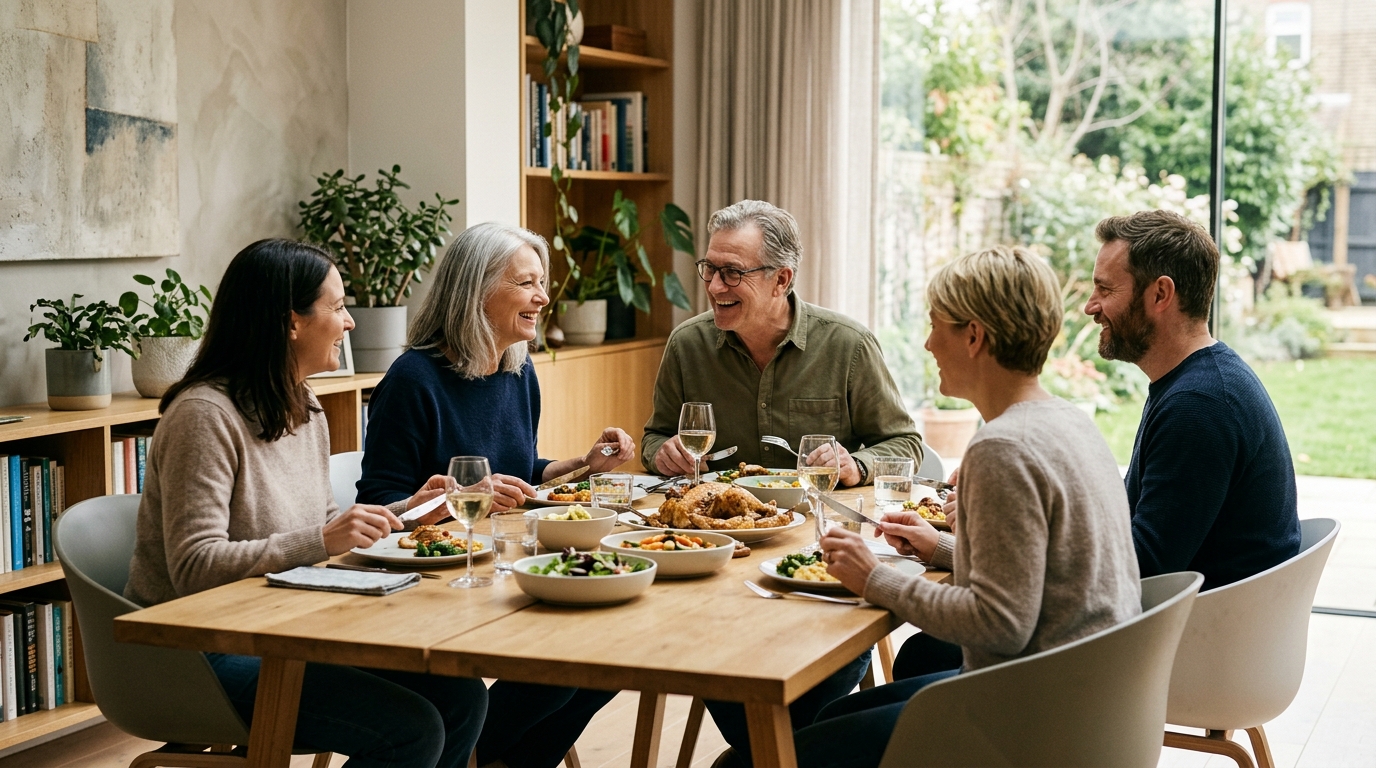
One of the most complex aspects of dating after 60 is the reaction of children, extended family, and long-term friends. Your children, even as adults, may have strong feelings about you seeing someone new. They are also grieving, and they may see your move toward dating as a sign that you are "moving on" from their other parent. It is important to communicate openly, but also to remember that your happiness and need for companionship are valid.
Family members may adjust at a different pace than you do. While you have lived with the silence of the house every day, they may only see the outward changes. Patience is key, but so are boundaries. You can acknowledge their feelings without allowing them to dictate your personal life. Sometimes, seeing that a new partner isn't trying to replace the person who died—but is instead a new friend and companion for you—helps ease the transition for everyone involved.
Things to keep in mind regarding family:
- Children may feel a sense of "loyalty" to the deceased parent; reassure them that your love for their late parent hasn't changed.
- Introduce new partners slowly and only when the relationship feels stable.
- Be prepared for some friends to feel uncomfortable; loss sometimes changes social circles in unexpected ways.
- It is okay to take another break from dating if the family pressure or your own emotions become too much to balance.
Ultimately, the dating over 60 community is full of people who have experienced similar losses. You are not alone in your hesitation or your hope. Whether you are looking for someone to travel with, someone to share Sunday lunch with, or a deep romantic connection, your path is yours to define. If you start dating and realise you aren't quite ready, there is no shame in stepping back. You can try again whenever it feels right for you.
Starting to date again does not require you to stop loving or remembering the person who died. Grief is not a debt that must be paid in years of solitude. Instead, a new relationship can begin when there is enough curiosity and emotional space in your life to get to know someone new as an individual, without expecting them to fill the shoes of the person you lost. It is a testament to the love you shared that you are willing to open your heart once again.