
Entering the dating world in your 40s often feels vastly different from the experiences you may have had in your 20s or 30s. Whether you are returning to the scene after a long-term marriage, a period of singlehood, or navigating life as a parent, there is a unique set of pressures that can lead to a sense of urgency. You might feel that "time is ticking" or that you need to find a compatible partner quickly to settle back into a comfortable domestic routine. However, building a relationship that actually lasts requires a foundation that simply cannot be rushed.
Setting the right pace is about balancing your genuine enthusiasm for a new person with the reality of your established life. When you are getting back into dating, it is easy to mistake the "spark" for long-term compatibility. By intentionally slowing things down, you allow space for reliability, consistency, and shared values to emerge. This isn't about playing games or being "hard to get"; it is about protecting your emotional wellbeing and ensuring that the person you are bringing into your life—and potentially into the lives of your children or family—is truly the right fit.
"The most successful relationships in our 40s are those where both partners respect the complexity of each other's existing lives. Speed is rarely an indicator of success; consistency is."
It is important to distinguish between taking a relationship slowly and being emotionally unavailable. Taking it slowly means you are fully present and interested, but you are mindful of the milestones. Emotional unavailability, on the other hand, often manifests as a lack of communication or an avoidance of any future planning. If you find yourself holding back because you are still processing a previous breakup, it might be worth considering the dynamics of rebound relationships to ensure you are ready for a new chapter.
Navigating the Practical Realities of UK Life
Dating in your 40s in the UK comes with logistical challenges that younger daters rarely face. You might be a professional in London juggling late nights in the City, or a manager in Birmingham with a heavy commuting schedule. Perhaps you live in Manchester and are dating someone from Leeds, meaning your meetings are limited by the TransPennine Express schedule or the M62 traffic. These aren't just inconveniences; they are the framework within which your new relationship must grow.
One of the most common hurdles is the "every other weekend" childcare arrangement. If you have your children on fixed dates and your potential partner has a demanding career or their own childcare rotation, finding time for a spontaneous Tuesday night dinner might be impossible. This is where communication becomes vital. Instead of interpreting a busy schedule as a lack of interest, you can view it as an opportunity to see how your partner manages their responsibilities. Reliability is far more attractive than spontaneity when you are looking for a long-term partner.
- Communication Frequency: There is no rule that says you must text every hour. In your 40s, a meaningful "good morning" or a check-in after a busy day is often more sustainable than constant digital chatter.
- The First Few Meetings: Consider meeting for a coffee or a quick lunch in a central location like New Street or Victoria Station before committing to a four-hour dinner. This keeps the pressure low.
- Establishing a Rhythm: Once you decide you like each other, look at your calendars. If you can only meet once a week because of work or parenting, accept that rhythm rather than trying to force a "standard" dating timeline.
For more advice on managing these early stages, explore the relationship guidance available through the NHS Every Mind Matters programme, which covers healthy communication, emotional wellbeing and setting boundaries. It is also essential to prioritise your safety when meeting new people, particularly during the first few encounters.
Communication, Trust, and the "Slow" Approach
The transition from "dating" to "a relationship" often causes anxiety. You might worry that if you don't ask for exclusivity quickly, you'll lose the person. Conversely, you might fear that bringing it up too soon will scare them off. The key is to discuss the pace rather than just the destination. You can say, "I am really enjoying getting to know you and I'm not seeing anyone else, but I'd like us to take our time before we make any big life changes." This shows interest without creating a pressure cooker environment.
Building trust is a gradual process. In your 40s, your past experiences—both good and bad—shape how you open up. According to Relate's guidance on learning to trust in a new relationship, trust isn't something that is granted overnight; it develops through getting to know someone and observing their behaviour over time. This is why rushing can be counterproductive; you need to see how a partner reacts when you are stressed, how they handle a disagreement, and whether they respect your boundaries over several months.
When children are involved, the stakes are higher. There is no "perfect" number of months to wait before an introduction, but a slower pace allows you to assess the relationship's stability first. If you are dating with children, your priority is their emotional security. A partner who respects a slower introduction is showing they value your family's wellbeing as much as yours.
Warning: Signs of Forced Acceleration
- Your partner pressures you to cancel plans with long-term friends to spend time with them.
- They talk about moving in or marriage within the first few weeks.
- They disregard your childcare or work commitments, calling them "distractions."
- They become upset if you don't respond to messages immediately during your working day.
If you have recently gone through a major life change, such as a legal separation, it is worth giving yourself space to process the experience before making major decisions about a new relationship. Rediscovering your identity while remaining open to someone new can take time, and there is no obligation to rush that process.
Finding Your Own Balance
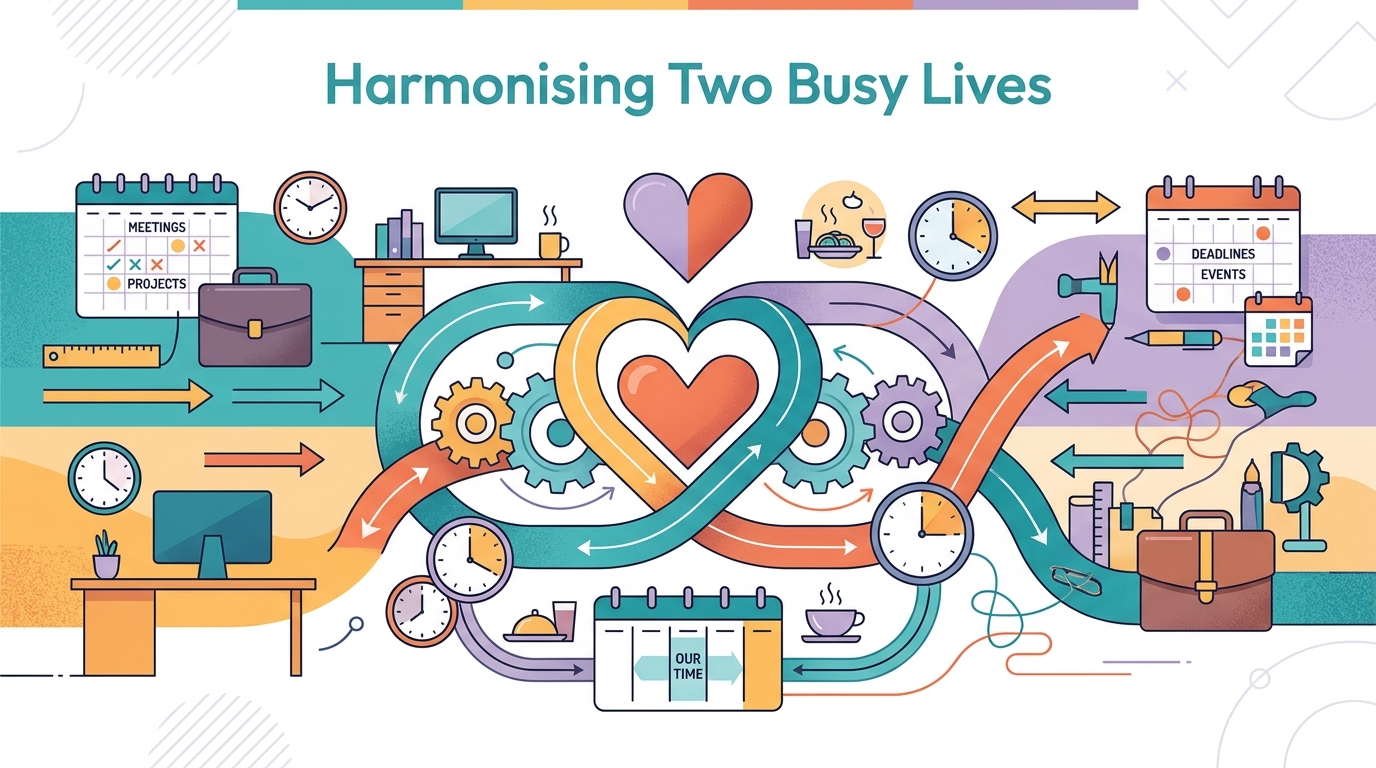
Ultimately, dating in your 40s is about integration. You aren't two blank slates starting from scratch; you are two complete individuals with histories, careers, and established social circles. A relationship that develops slowly allows these two worlds to merge naturally. Maintaining your independence while building a partnership can help you establish a connection that fits into your everyday life rather than replacing it.
If you find that one person wants to move faster than the other, it isn't necessarily a sign of incompatibility. It is a prompt for a conversation. Perhaps one of you has more free time, while the other is currently navigating a promotion or a difficult co-parenting phase. Compromise is possible, but only if both people feel heard and neither feels pressured. By focusing on the quality of your time together rather than the speed of your milestones, you create a space where a meaningful, long-term connection can truly flourish.